Refrigerator Clicking, Buzzing, or Running Constantly? What the Sounds May Mean
Appliance Repair, Refrigerator Noise, Fridge Troubleshooting
Refrigerators are not silent appliances.
Clicks, humming, buzzing, fan sounds, and changes in compressor speed can all occur during normal operation. What matters most is whether the sound is new, unusually loud, repetitive, or accompanied by a cooling problem.
If your refrigerator has recently started clicking, buzzing, vibrating, or running much longer than usual, here is what those symptoms may mean and what you can safely check before scheduling repair.
Are Refrigerator Clicking and Buzzing Sounds Always a Problem?
No.
A refrigerator may make normal sounds when:
the compressor starts or changes speed
fans turn on and off
an ice maker requests water
a water valve opens
a damper changes position
the refrigerator enters or exits a defrost cycle
refrigerant moves through the system
The more useful question is whether the refrigerator sounds different from its normal operating pattern.
A new loud sound combined with rising temperatures, repeated starting attempts, error codes, or other performance changes deserves closer attention.
Refrigerator Clicking: What Could It Mean?
An occasional click can be completely normal.
Depending on the refrigerator design, clicking may come from temperature controls, valves, dampers, defrost components, or other operating parts.
When clicking deserves attention
Pay closer attention if the refrigerator:
clicks repeatedly and does not begin cooling
starts and stops abnormally
is getting warmer
repeatedly trips a breaker
displays an error code
makes a new loud clicking sound that was not present before
One possible cause of repeated start attempts can involve compressor-start components, but clicking alone is not enough to diagnose a compressor failure.
Some refrigerators can also produce clicking or buzzing when an ice maker requests water, particularly if the water supply is unavailable.
Refrigerator Buzzing: Normal Hum or Something New?
A low hum or brief buzz can also be normal.
Possible normal sources include:
the compressor
condenser or evaporator fans
the ice maker water valve
changes in compressor speed
vibration transferred through flooring or cabinetry
A buzzing sound becomes more useful diagnostically when you notice when it happens.
For example:
Does it occur just before the ice maker fills?
Does it stop when a refrigerator or freezer door opens?
Is it coming from inside the freezer?
Does it appear only while the compressor is running?
Did it begin after the refrigerator was moved or installed?
These details can help narrow the source considerably.
Check for Vibration Against Cabinets or Surrounding Surfaces
Sometimes the refrigerator itself is operating normally, but vibration is being amplified by the installation.
Check whether:
an accessible panel is vibrating
bottles or containers inside are touching each other
the refrigerator is visibly contacting nearby cabinetry
an exterior grille is loose
the unit appears uneven
For a built-in or panel-ready refrigerator, do not pull the appliance out of the cabinetry simply to investigate a noise. These units can be heavy and may involve plumbing, electrical connections, custom panels, and anti-tip hardware.
What If the Refrigerator Seems to Run Constantly?
Long run times do not automatically mean something is wrong.
Modern high-efficiency and variable-speed refrigerators may run for extended periods while maintaining temperature.
Run time can also increase after:
adding a large amount of groceries
frequent door openings
warm food is placed inside
warmer room conditions
a recent power interruption
changing the temperature setting
What matters is whether the refrigerator is actually maintaining the correct temperature.
If the unit runs for long periods and the refrigerator or freezer is getting warmer, then further diagnosis may be needed.
Common Reasons a Refrigerator May Run Longer Than Expected
If temperatures are not stable, possible factors include:
Blocked Airflow
Food placed directly against interior vents can interfere with circulation.
Make sure refrigerator and freezer vents remain clear.
Door-Seal Problems
A door that does not close completely can allow warm air into the cabinet.
Check for:
food preventing the door from closing
an obviously damaged gasket
shelving or drawers sitting incorrectly
visible gaps around the closed door
Condenser or Ventilation Problems
Depending on the refrigerator design, restricted ventilation or a dirty accessible condenser area can affect cooling performance.
Follow the cleaning and ventilation instructions for your specific model.
Do not remove panels or move a built-in refrigerator unless the manufacturer's instructions specifically call for homeowner access.
Fan Problems
Evaporator and condenser fans help move air through different parts of the refrigeration system.
A fan that is contacting ice, debris, or another component may create buzzing, rattling, or grinding sounds.
A fan problem can also affect temperature performance.
Temperature Sensor or Control Problems
If the refrigerator receives incorrect temperature information, its cooling behavior may change.
Possible symptoms can include unusual cycling, extended operation, unstable temperatures, or inconsistent cooling.
Safe Checks You Can Make First
Before scheduling refrigerator repair:
Check the temperatures. Confirm that both refrigerator and freezer compartments are maintaining their normal settings.
Listen for the location of the sound. Note whether it comes from the freezer, fresh-food compartment, bottom, top, or rear of the appliance.
Notice when it happens. Is the noise constant, during startup, after closing a door, or when the ice maker operates?
Check interior airflow. Make sure food is not blocking vents.
Check the doors. Make sure they close completely and nothing is interfering with the gasket.
Think about recent changes. A grocery load, power interruption, filter change, appliance movement, or unusually frequent door opening may explain temporary changes in operation.
If possible, record a short video of the sound. That can be very helpful during diagnosis.
You can text a video, model information, or photos to 645.240.0004.
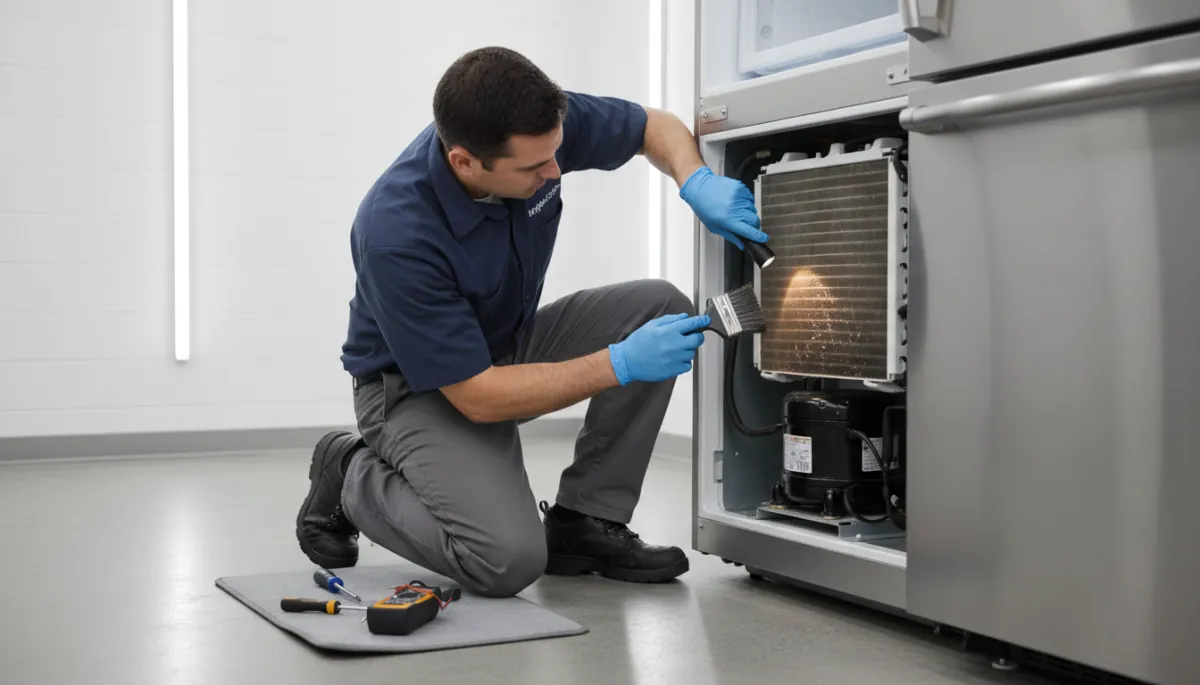
Proper maintenance and early diagnosis prevent costly compressor failures and food loss.
When Refrigerator Noise Should Be Checked Professionally
Consider scheduling service when a new sound is accompanied by:
rising refrigerator or freezer temperatures
repeated failed startup attempts
recurring error codes
unusual grinding or scraping
electrical burning smells
visible sparking or arcing
repeated breaker trips
water leaking from the appliance
a fan that appears to be striking ice or another object
a significant change from the refrigerator's normal operating sound
If the appliance is also losing temperature, keep the doors closed as much as possible while deciding what to do next.
What Does Refrigerator Diagnosis Cost?
For residential service, the Appliance Crew diagnostic/service call is $69.
For commercial service, the diagnostic/service call is $129.
If you approve the recommended repair, the diagnostic charge is applied to the repair.
You receive a written quote before work begins, and qualifying repairs include a 90-day parts and labor warranty.
Refrigerator Repair in South Florida
Appliance Crew provides refrigerator and freezer repair throughout South Palm Beach and Broward Counties, including built-in, integrated, column, and freestanding refrigeration.
If your refrigerator has developed a new clicking, buzzing, vibrating, or grinding sound, an experienced appliance repair technician can determine whether you are hearing normal operation, an installation-related vibration, or a component that needs attention.
For additional help, visit our Refrigerator & Freezer Repair page or read our guides on Refrigerator Not Cooling and Refrigerator Warm but Freezer Cold.
To schedule service, call 561.933.9955, text 645.240.0004, or book online.


