Refrigerator Warm but Freezer Cold? What It Usually Means
Refrigerator & Freezer Repair, Appliance Troubleshooting, Refrigerator Issues, Cooling Problems
A refrigerator that feels warm while the freezer is still cold is a useful clue. In many refrigerators, cold air is produced around the freezer evaporator and circulated into the fresh-food compartment. If that airflow is interrupted, the freezer may continue to feel cold while the refrigerator temperature begins to rise.
The good news is that this does not automatically mean the refrigerator needs to be replaced. The cause may be an airflow, fan, defrost, sensor, or control problem that can be diagnosed and repaired.
Why Can the Freezer Stay Cold While the Refrigerator Gets Warm?
In many conventional refrigerator designs, a fan moves cold air from the freezer area into the refrigerator compartment. Vents and dampers regulate how that air circulates.
When something interferes with that process, the refrigerator section may warm up first.
Premium and newer refrigerators can use more complex cooling systems, including separate evaporators or independently controlled compartments, so the exact cause depends on the model. A cold freezer makes airflow and defrost problems worth checking, but it does not completely rule out other refrigeration or control-system issues.
Common Causes of a Warm Refrigerator and Cold Freezer
Blocked Air Vents
Food containers pushed against interior vents can restrict cold-air circulation. An overpacked refrigerator can create the same problem.
Check that the vents inside both compartments are clear and that food is not pressed tightly against the rear wall.
Frost or Ice Buildup
Heavy frost near the back wall of the freezer can indicate that the evaporator area is icing over.
When ice builds up around the evaporator or fan, airflow into the refrigerator compartment can become restricted even while the freezer remains cold.
Evaporator Fan Problems
The evaporator fan helps circulate cold air through the refrigerator.
If the fan is damaged, obstructed by ice, or not receiving the correct signal from the controls, the refrigerator compartment may not receive enough cold air.
Damper or Airflow Control Problems
Many refrigerators use a damper to regulate how much cold air enters the fresh-food compartment.
If the damper becomes stuck or its control fails, the freezer may continue cooling while the refrigerator becomes noticeably warmer.
Defrost System Problems
A problem with the defrost heater, sensor, thermostat, or related controls can allow frost to accumulate around the evaporator.
Over time, that frost can restrict airflow and create the classic symptom of a cold freezer with a warm refrigerator.
Temperature Sensors or Electronic Controls
Modern refrigerators rely on sensors and electronic controls to manage temperature and airflow.
A faulty sensor, control board, or related component can produce uneven temperatures even when some parts of the refrigerator appear to be working normally.
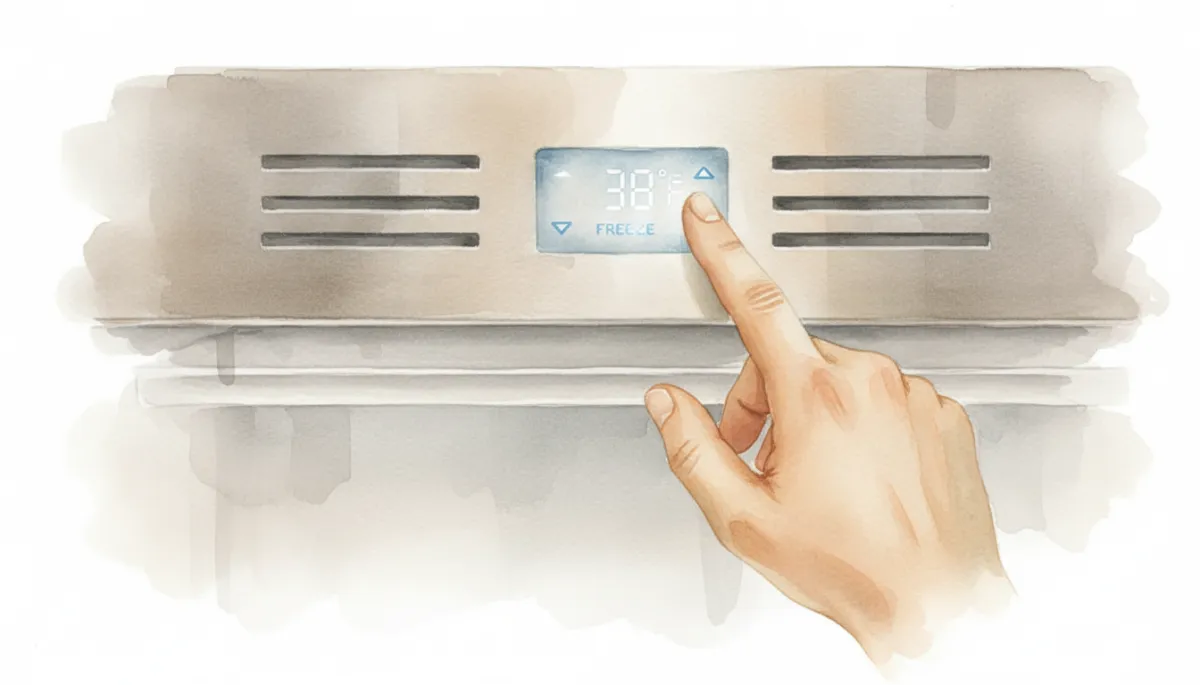
Quick airflow checks can reveal simple causes before parts replacement is needed.
What You Can Safely Check Before Scheduling Repair
Before scheduling refrigerator service, you can make a few simple checks without removing panels or taking the appliance apart.
Confirm that the refrigerator and freezer temperature settings have not been changed accidentally.
Make sure interior vents are not blocked by food or containers.
Check for visible frost or ice buildup along the rear freezer wall.
Avoid overpacking either compartment.
Make sure the refrigerator doors are closing completely and the door gaskets are not being held open by food or shelving.
Minimize unnecessary door opening if the refrigerator temperature is already rising.
If you notice heavy frost, unusual fan noises, clicking, repeated cycling, or temperatures continuing to rise, professional diagnosis is usually the better next step.
When to Schedule Refrigerator Repair
If clearing the vents and checking the settings does not solve the problem, the refrigerator may need testing of the evaporator fan, defrost system, damper, temperature sensors, controls, or refrigeration system.
Appliance Crew provides refrigerator and freezer repair throughout South Palm Beach and Broward Counties, including Boca Raton, Delray Beach, Boynton Beach, Deerfield Beach, Pompano Beach, Fort Lauderdale, and surrounding areas.
An experienced appliance repair technician can identify the actual cause before parts are replaced, which is especially important with built-in and premium refrigeration systems where multiple components can produce similar symptoms.
What Does a Refrigerator Diagnostic Cost?
For residential service, the Appliance Crew diagnostic/service call is $69.
For commercial service, the diagnostic/service call is $129.
If you approve the recommended repair, the diagnostic charge is applied to the repair. You receive a written quote before repair work begins, and qualifying repairs include a 90-day parts and labor warranty.
Need Help With a Warm Refrigerator?
If your refrigerator is getting warmer while the freezer remains cold, you do not have to guess which component has failed.
You can also read our Refrigerator Not Cooling guide for a broader look at common cooling problems, or visit our Refrigerator Repair page to learn more about service options.
To schedule service with Appliance Crew, call 561.933.9955, text 645.240.0004, or book online.
The sooner a cooling problem is diagnosed, the easier it is to protect your food and determine whether the problem is a straightforward airflow issue or something that requires a more involved repair.


