Ice Maker Not Making Ice but Water Dispenser Works? What to Check
Ice Maker & Wine Cooler Repair, Appliance Troubleshooting — ice-maker-not-making-ice-water-dispenser-works
If your refrigerator dispenses water normally but has stopped making ice, that is a useful diagnostic clue.
It tells you that water is reaching the refrigerator, but it does not confirm that every part of the ice-making system is working correctly. The ice maker may have its own water path, valve control, fill tube, sensors, temperature requirements, and operating controls.
Before scheduling repair, there are several safe checks you can make.
1. Make Sure the Ice Maker Is Turned On
Start with the simplest possibility.
Depending on the refrigerator, the ice maker may be controlled by:
an electronic setting on the refrigerator display
a switch near the ice maker
a shutoff arm
a sensor that detects when the ice bin is full
Check the owner's manual for your specific model and confirm that ice production is enabled.
Also make sure the ice bin is installed correctly and that ice is not preventing the shutoff mechanism from operating normally.
If the ice maker was recently turned back on, allow time for the appliance to begin a normal ice-making cycle. Depending on the model and conditions, full production may take many hours.
2. Check the Freezer Temperature
Ice production depends heavily on freezer temperature.
Many manufacturers recommend keeping the freezer around 0°F, although the exact acceptable operating range can vary by refrigerator.
Check the temperature setting first.
If you have reason to believe the displayed temperature is inaccurate, an independent freezer thermometer can provide additional information.
Also check that:
air vents are not blocked by food
the freezer is not severely overpacked
the door closes completely
the door gasket is not obviously damaged
the freezer is actually maintaining its set temperature
A freezer can still keep food frozen while being warmer than ideal for normal ice production.
If the freezer itself is not maintaining temperature, the problem may involve the refrigerator's cooling system rather than the ice maker alone.
3. Check the Water Filter
A water dispenser can continue working even when water flow is no longer ideal for ice production.
A restricted, incorrectly installed, or overdue filter can reduce water flow to the ice maker.
Check:
the filter status indicator, if your refrigerator has one
when the filter was last replaced
whether water flow from the dispenser has become noticeably slower
whether the filter was recently changed and installed correctly
Follow the replacement schedule specified for your refrigerator model rather than relying on one universal interval.
If the problem started immediately after a filter replacement, incorrect installation or air in the water system may also be relevant.
4. Look for Ice Around the Bin or Fill Area
Remove the ice bin if it can be removed normally without tools.
Look for:
large clumps of ice
cubes frozen together
ice obstructing the shutoff mechanism
visible frost or ice around the ice maker
a visibly frozen fill tube
If the fill tube is frozen, simply thawing it may not solve the underlying problem. A frozen fill tube can be associated with water-flow, valve, temperature, or other issues that need diagnosis.
Do not use knives, screwdrivers, or other sharp tools to chip away ice.
Avoid applying concentrated heat with a hair dryer or heat gun. Excessive heat can damage plastic components, wiring, insulation, or the refrigerator liner.
5. Consider the Water Path to the Ice Maker
The fact that your water dispenser works does not guarantee that the ice maker is receiving the correct amount of water.
Depending on the refrigerator design, the ice maker may have a separate valve circuit or water path after water enters the appliance.
Possible problems can include:
restricted water flow
a frozen fill tube
a problem with the ice-maker side of the inlet valve
a kink or installation issue in the water system
an internal water-line restriction
If you have a built-in or panel-ready refrigerator, do not pull the appliance out of the cabinetry simply to inspect hidden water lines. These installations can be heavy and may involve cabinetry, flooring, anti-tip hardware, electrical connections, and plumbing.
An experienced appliance repair technician can inspect the complete water path safely if needed.
6. The Ice Maker Itself May Have a Problem
If freezer temperature is correct, the filter and visible ice areas look normal, and water dispensing is working, the problem may be within the ice-making system.
Possible causes can include:
an ice maker motor or module problem
a failed temperature sensor
a bin-level sensor problem
a water inlet valve issue
a wiring or electronic control problem
a failure during the fill, freeze, or harvest portion of the ice-making cycle
These symptoms can overlap, so replacing an ice maker assembly based only on “no ice” can become an expensive guess.
Proper diagnosis should determine which stage of the cycle has actually stopped.
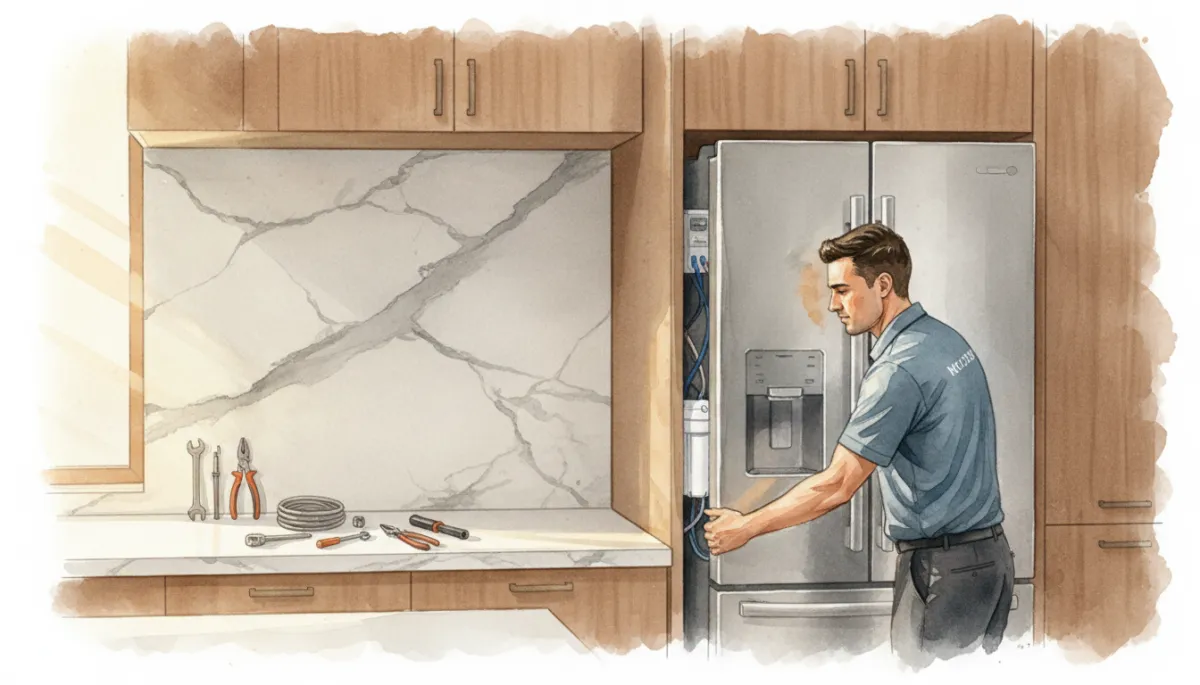
A quick check of the water line and filter often reveals simple, fixable causes.
What to Note Before Scheduling Service
A few details can make the diagnostic visit more efficient.
If possible, have ready:
refrigerator brand
model number
serial number
current freezer temperature
whether the water dispenser works normally
whether the ice maker makes no ice or only a small amount
any error codes
a photo of visible frost, ice buildup, or the ice-maker area
You can also text appliance information or photos to 645.240.0004.
What Does Ice Maker Diagnosis Cost?
For residential service, the Appliance Crew diagnostic/service call is $69.
For commercial service, the diagnostic/service call is $129.
If you approve the recommended repair, the diagnostic charge is applied to the repair.
You receive a written quote before repair work begins, and qualifying repairs include a 90-day parts and labor warranty.
Ice Maker Repair in South Florida
Appliance Crew provides ice maker repair throughout South Palm Beach and Broward Counties for refrigerator ice makers as well as built-in and premium refrigeration systems.
If your water dispenser still works but the ice maker has stopped producing ice, an experienced appliance repair technician can check freezer temperature, water flow, the fill system, sensors, controls, and the ice-making cycle to identify the actual cause.
Learn more on our Ice Maker Repair page or explore the Appliance Repair & Care Guide for additional troubleshooting information.
To schedule service, call 561.933.9955, text 645.240.0004, or book online.


